









For complex electronics manufacturing, there are several common terms for the configuration of a unit: as designed, as built, as maintained. Another term we use at IntraStage is ‘as-is’.
- As designed: The designed configuration of a product.
- Example sources: CAD
- As built: The final configuration of a product
- Example sources: Assembly Genealogy files, Rework records
- As maintained: The configuration of a product in the field
- Example sources: MRO logs
- As-Is: The accumulated genealogy and history of a unit throughout its lifecycle, including all disassembly and assembly information
- Example source: BlackBelt Enterprise
By seamlessly integrating all genealogy data from manufacturing, field, and rework cycles, BlackBelt Enterprise gives insight into the performance of a complex electronic system down to its constituent parts.
- Tracking complex electronics true genealogy
- Traceability for multiple assembly, disassembly, and rework processes
- Multiple levels of High Level Assemblies (HLA), Lower Level Assemblies (LLA) and components
- Traceability for multiple assembly, disassembly, and rework processes
- Assembly and disassembly tracking
- Paperless Genealogy Forms
- Automated data capture
- Standard formats
- Off-the-shelf genealogy analytics
- Normalized Repair, Assembly, and MRO data
- Traceability
- Better Supplier Capability/Quality
- Dog Boards/Problem component identification
- Compliance
- Better design, support, and production
Aggregated Visibility of PPM and DPMO
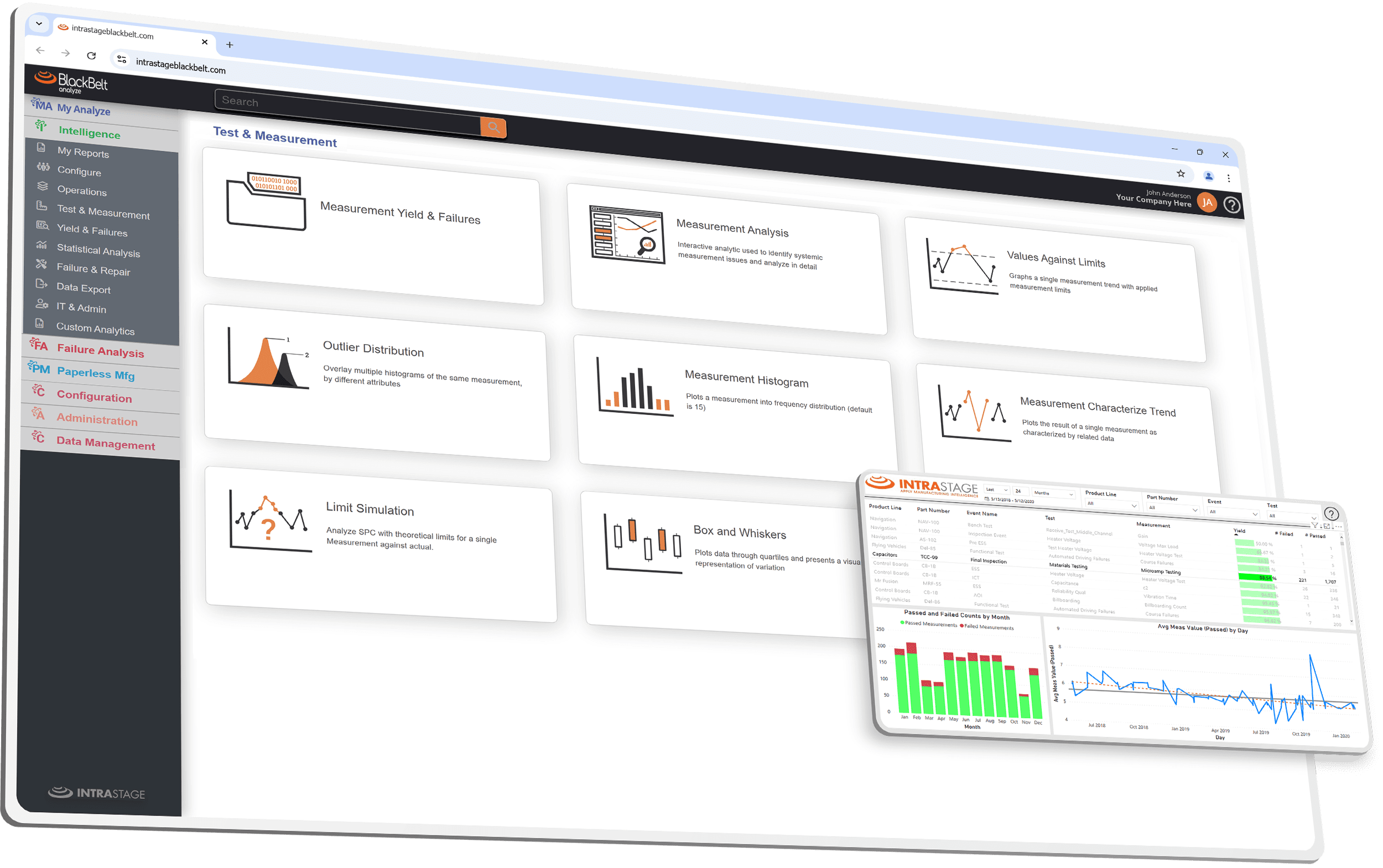
Bold corporate-level initiatives like driving towards zero PPM or DPMO require aggregation of data from various sources. This often results in an implementation of a common Digital Twin data model that scales across product lines, manufacturing locations, and supply chains.
Supplier quality isn’t measured solely from supplier scorecards, incoming inspection, or inspection at the source. The quality of supplier parts needs to be gauged in manufacturing to see what is failing via PPM and DPMO. These metrics drive product quality and operational efficiency.
Overall Equipment Effectiveness (OEE) and Cycle Time are critical metrics describing how a product is performing in its manufacturing process, and the efficiency and speed of that process and its constituent machinery. Executive leadership needs these metrics to maintain profitability, efficiency, and manufacturing velocity.
With Fusion, users can have real-time insight into analytics that drive these metrics and have root-cause workflows to identify, investigate, and resolve any OEE, Cycle Time, and utilization issues.
Having high-level metrics is good; having high level metrics integrated with workflows that leverage the underlying details that drive and provide insight into the metrics is better.
A board overlay is a prime example of having multiple sources of data inform a workflow that outputs in better quality and processes.